
TL;DR
Watch for these seven dead tree signs: a lack of leaves during the growing season, brittle branches, fungal growth, cracks or cankers, color changes in the bark, soft or spongy wood, and a lack of new growth. Leaning or visible cavities are also worth flagging, even if the tree still has some green remaining. A tree that is showing several of these signs, especially near a house, driveway, or power line, should be assessed for removal rather than simply observed. Dead trees are more dangerous to remove than healthy ones, so taking a DIY approach isn’t worth the risk. Pikesville Tree Service offers free estimates and has removed dead and hazardous trees across Baltimore County, Howard County, and Carroll County for over 20 years. Call us at 410-487-4932.
By late summer, most Maryland trees have been through months of heat, stretches of drought, and a storm or two (or ten).
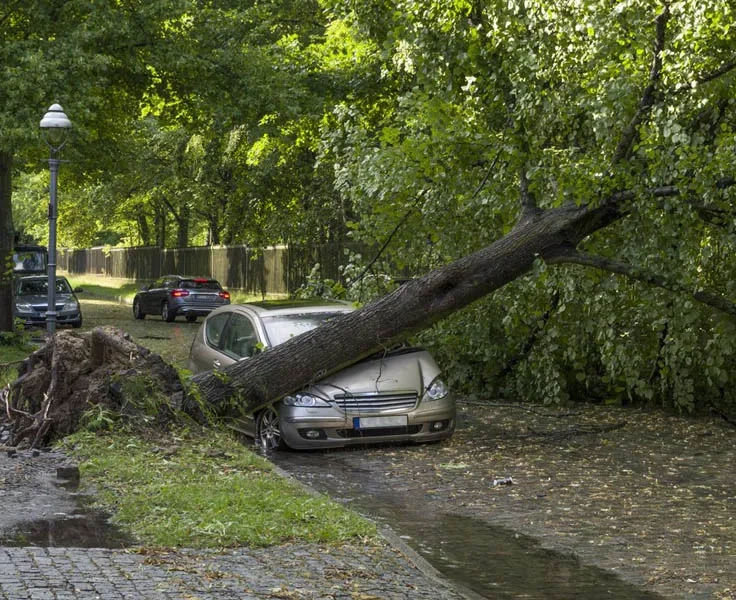
If a tree took a hit earlier this season, the signs of stress are often easiest to spot right now, before the leaves start dropping and hide the clues you’d otherwise catch. Knowing the dead tree signs to look for can help you catch a hazard before it becomes an emergency, and before you’re stuck removing a fallen tree instead of a standing one.
- Lack of Leaves During the Growing Season: A tree that should be filled with leaves out but instead looks thin, patchy, or bare during the height of summer is demonstrating something important. Some thinning can be seasonal or drought-related and may bounce back, but a tree that stays bare through a full growing season, especially after other stress like a recent storm, is more likely dead.
- Brittle Branches: Healthy branches will have some give to them. Dead branches don’t. If a branch snaps cleanly and easily rather than bending, that’s a sign the wood inside has already died, even if the bark around it still looks intact.
- Fungal Growth: Mushrooms or other fungal growth on the bark or around a tree’s root zone are one of the more reliable signs of internal decay. Fungi typically feed on dead or decaying wood, so if you’re seeing them on a tree that’s still standing, it usually means the decline has already been underway for a while.
- Cracks or Cankers: Vertical cracks in the trunk, or sunken, dead-looking patches on the bark known as cankers, are both structural and disease red flags. Cracks weaken the trunk at exactly the point where it’s most likely to fail under wind or storm loading, while cankers often signal a fungal or bacterial infection working its way through the tree.
- Color Changes: Healthy bark boasts a consistent color and texture for the species. Bark that’s turned noticeably gray or darkened, especially in patches, can be a sign that the tissue underneath is dead or dying.
- Wood Condition: A simple probe test is very telling. Press a knife or screwdriver into the bark. If the wood underneath feels spongy or soft rather than firm, that’s a strong indicator the tree is dead or well into decline.
- Lack of New Growth: Trees put out new buds, twigs, or shoots during their growing season. A tree that shows no new growth over an extended period, even after a full season has passed, is likely no longer alive.
A pronounced lean or visible cavities near the base are also worth flagging to an arborist, even if the tree still has some green left, since both often point to root or trunk damage that isn’t obvious from the signs above.
When to Remove a Dead Tree vs When You Can Wait
Not every sign above means a tree needs to come down immediately. A single dead limb on an otherwise healthy tree can often be addressed with pruning. When you’re seeing several of these signs together, or when the tree is within falling distance of your house, driveway, power lines, or a neighboring property, it’s time to stop watching and start scheduling removal services. The risk of a declining tree isn’t just that it might fall eventually. It’s that dead wood becomes unpredictable, and a tree that looks stable one week can fail in the next storm.
Why DIY Removal Isn’t Worth It
As said, dead trees are more hazardous to remove than healthy ones. Dead wood is brittle, unpredictable under tension, and prone to breaking in ways a chainsaw and a rope in the driveway can’t safely account for. A professional tree removal service brings the proper tools, rigging, and experience to take a compromised tree down in sections when needed, without guessing how it’s going to behave.
What a Professional Dead Tree Removal Looks Like
At Pikesville Tree Service, our trained crew starts by assessing the tree’s condition, lean, and proximity to structures, then decides on the safest removal method, sectioning it from the top down when there’s limited space or risk to nearby property. Once the tree is down, stump grinding is available for anyone who wants a clean, level yard, and the crew clears and hauls away all debris, so the property is left tidy.
Fall Is the Best Time to Get a Second Opinion
Late summer into early fall, before leaves drop and hide the canopy, is perhaps your best window to walk your property and check for dead tree signs. It’s also a good time to have a tree inspected if it took visible stress from an earlier storm this season.
Our team offers free, no-obligation estimates and has been removing dead, diseased, and hazardous trees throughout Baltimore County, Howard County, and Carroll County for over 20 years. If you’re seeing any of the signs above, call 410-487-4932 to have a certified tree expert take a look before it becomes a bigger problem.
***
FAQs
Can a dead tree be saved, or does it always need to come down?
Once a tree is fully dead, it can’t be revived, and removal is generally the safest option. If only a portion is dead, like a single limb, pruning may be enough, but that’s best confirmed by having the tree inspected rather than guessing from the ground.
How quickly does a dead tree need to be removed?
It depends on the tree’s condition and location. A dead tree with no lean, no cracks, and no proximity to structures may have some time, but one showing multiple signs of decline, or one that could fall on a house, driveway, or power line, should be addressed as soon as possible.
Do dead trees always show obvious signs?
Not always. Some decay occurs within the trunk or root system before it’s visible on the outside. That’s part of why a professional inspection is worthwhile if you’re unsure, especially for large trees near structures.
Is it cheaper to remove a tree before it falls?
Generally, yes. Removing a standing dead tree on a planned basis is typically more straightforward than emergency removal after it’s fallen on a structure, vehicle, or roadway, which often comes with higher urgency and potential property damage.
Will Pikesville Tree Service also remove the stump?
Yes. Stump grinding is available for anyone who wants a clean, level yard after a tree comes down, rather than leaving a stump behind.