
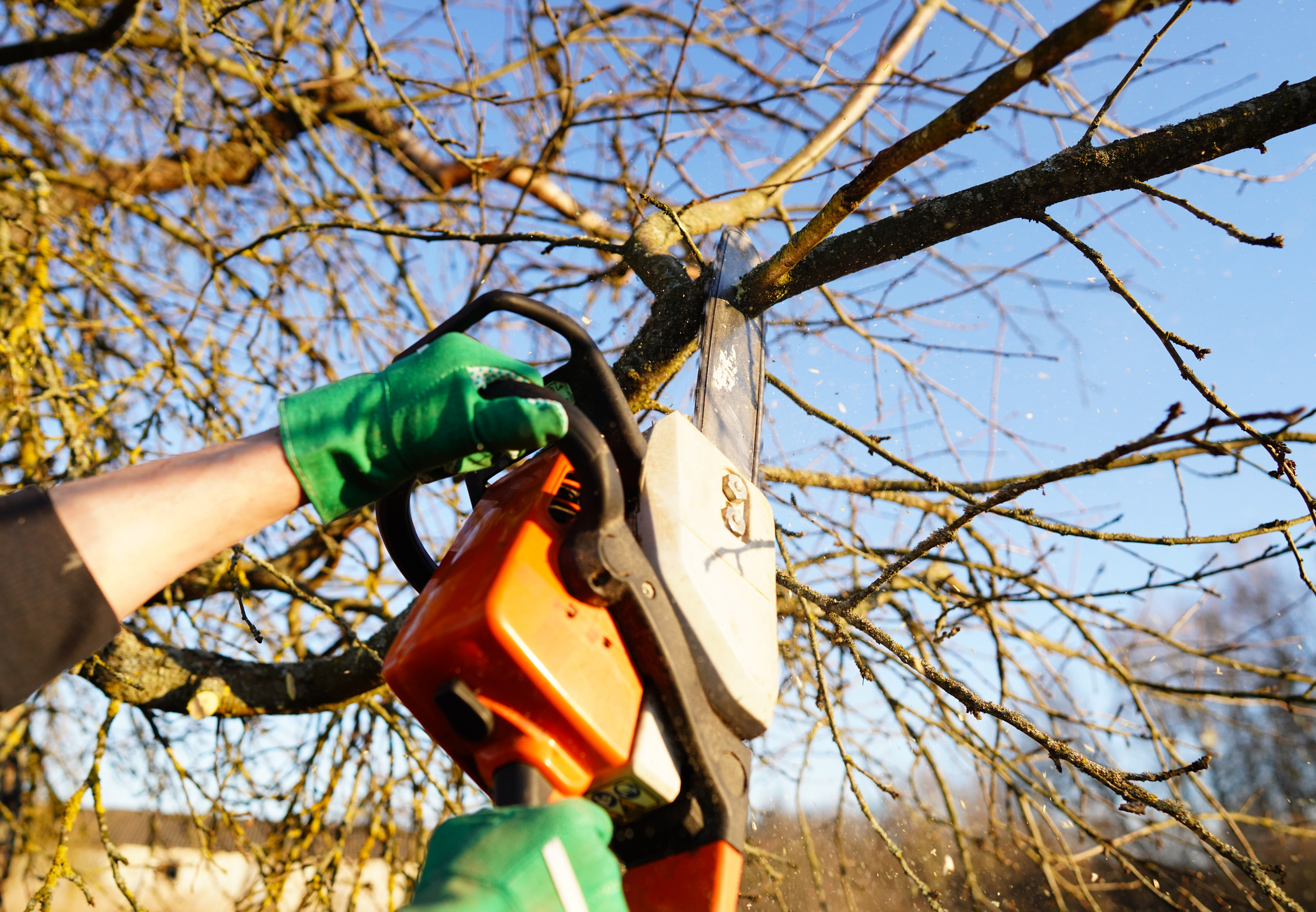
TL;DR
Late winter (December through March) is the best time to prune most Maryland trees, since dormant trees show their full branch structure, handle cuts with less stress, and carry a much lower risk of disease or pest spread than pruning during the growing season. Watch for dead limbs, broken branches, crossing or inward-facing growth, limbs near utility lines or the roof, and an unbalanced canopy as signs a tree needs attention. Spring-flowering trees like dogwoods and cherries are the exception and best pruned right after they bloom. Hazardous limbs should be taken care of promptly regardless of season. Pikesville Tree Service offers free estimates and professional pruning and trimming across Baltimore County, Howard County, and Carroll County. Call 410-487-4932 to book before the winter pruning season fills up.
Most tree work is reactive. We schedule it after a storm, after a branch cracks, or after something starts to look… off. But the best time to prune trees is a season most homeowners aren’t thinking about yet: late winter, when trees are still dormant, and the yard is the last thing on anyone’s to-do list.
Here’s why winter pruning and trimming matters, what to look for on your own property, and when the dormant-season rule doesn’t apply.
Why Winter Is the Best Time to Prune Most Trees in Maryland
Once a tree drops its leaves for the season, its branch structure is fully visible. This makes it far easier to spot crossing limbs, weak branch unions, and imbalanced growth than it is in the middle of summer when foliage hides everything.
Dormant trees are also less stressed by pruning, since they’re not actively pushing new growth or channeling energy into leaves and fruit. What’s more, many common tree diseases and damaging insects are far less active in cold weather, so winter cuts have a much lower risk of spreading infection or attracting pests than cuts made during the growing season. In Maryland, that window generally runs from December through March, right before spring growth kicks back in.
Signs Your Trees Need Pruning or Trimming
Uncertain if a tree on your property needs attention? Be sure to check for:
- Dead limbs. Any branch with no leaves or foliage, especially if the rest of the tree looks healthy, should be removed before it becomes a hazard.
- Broken branches. Limbs that have cracked but are hung up in the canopy instead of falling are a safety issue, and they’re worth having removed before they come down on their own.
- Crossing branches. When two limbs rub against each other, it restricts airflow and sunlight, creating a weak point where one or both branches are more likely to break.
- Inward-facing branches. Limbs growing back toward the trunk instead of outward should typically be shortened or removed so the canopy can grow in a healthier direction.
- Branches near utility lines or the roofline. Limbs growing too close to power lines or a roof are a hazard that’s worth addressing before storm season, not after.
- An unbalanced canopy. If most of a tree’s weight is concentrated on one side, it can cause the tree to lean and put uneven strain on the root system over time.
The Benefits of Regular Pruning & Trimming
Beyond catching the issues above, routine pruning and trimming pays off in several ways. Removing dead or damaged limbs redirects a tree’s energy toward its healthy growth, improving overall structure and making it more resilient in high winds or heavy snow. It also opens the canopy to better sunlight and airflow, which helps prevent the conditions that let disease take hold in the first place.
Regularly maintained trees tend to show problems earlier, when they’re still simple and inexpensive to fix, rather than years later when a declining limb turns into a full tree removal. Simply put, a well-maintained tree is safer — for your house, your car, and anyone walking underneath it — and offers increased curb appeal.
Exceptions to the Winter Rule
Dormant-season pruning can be ideal for most shade and deciduous trees, but the timeline isn’t universal. Spring-flowering trees, like dogwoods, cherries, and magnolias, set their flower buds the previous summer. Pruning them in winter could cut off buds that would have bloomed. These trees are generally better pruned right after they finish flowering instead. Regardless of season, a broken, hanging, or hazardous limb shouldn’t wait for the “right” time of year. Safety concerns get addressed immediately, dormant season or not.
Get Help from the Pros: Pruning & Trimming Services
Pruning well takes more than a ladder and a pair of loppers. Pikesville Tree Service’s crew is trained to diagnose what a tree needs and target only those areas, rather than cutting branches without a plan. That distinction matters: done poorly, pruning can do more harm than good, while done right, it sets a tree up for stronger, healthier growth for years.
Book Your Winter Pruning Before the Season Fills Up
Because dormant-season pruning is the right call for so many Maryland trees, this window tends to book up fast. Scheduling early means your trees are ready to head into spring stronger, not further behind. Pikesville Tree Service offers free, no-obligation estimates and serves Baltimore County, Howard County, and Carroll County. Call 410-487-4932 to get your property on our schedule before the rush.
***
FAQs
Why is winter the best time to prune trees?
Without leaves in the way, it’s easier to see a tree’s structure and spot problems. Dormant trees are also less stressed by pruning, and many diseases and pests that spread through fresh cuts are far less active in cold weather.
Does every tree need to be pruned in winter?
No. Spring-flowering trees like dogwoods, cherries, and magnolias set next year’s flower buds the previous summer, so they’re usually pruned right after they finish blooming instead of during dormant season.
How often should trees be pruned?
It depends on the tree’s age, species, and condition, but many established trees benefit from a checkup every one to three years, with younger or fast-growing trees sometimes needing more frequent attention.
What happens if a tree isn’t pruned regularly?
Dead or crossing limbs can weaken the tree’s structure over time, increase the risk of storm damage, and make the tree more vulnerable to pests and disease. Small issues left unaddressed tend to turn into bigger, more expensive problems.
Can I prune my own trees, or should I call a professional?
Small, easily reachable branches are often fine to handle yourself. Anything near power lines, on a large tree, or requiring climbing equipment is safer left to a trained crew who can diagnose the tree’s needs rather than guessing at which branches to cut.